Composing with Colour Accents in Everyday Streets
Composing with Colour Accents in Everyday Streets
Colour accents—those small, vivid areas of colour set against neutral surroundings—can act as anchors in a composition. This guide helps you practise finding and composing with these accents, turning ordinary streetscapes into controlled, calm studies of hue and balance.
Preparation Checklist
- Choose a neighbourhood with a mix of neutral tones and occasional bright elements: signage, doors, bicycles, or flowers.
- Bring a camera or phone with easy framing control and a neutral picture profile if possible.
- Allow 30–40 minutes for slow observation and multiple compositions.
Exercises
- Colour hunt: walk a short route and list five distinct colour accents you notice. Record a quick image of each accent without worrying about context.
- Isolation practice: choose one accent and make five variations—tight crop, wide context, different angles, foreground obstruction, and a reflection shot.
- Balance study: create three compositions where the accent is placed differently in the frame (left, center, right). Observe how placement affects the image’s balance.
- Pairing palette: find two accents that complement or contrast each other and make a single frame where both are visible. Consider how distance and depth separate or join the colours.
Compositional tips
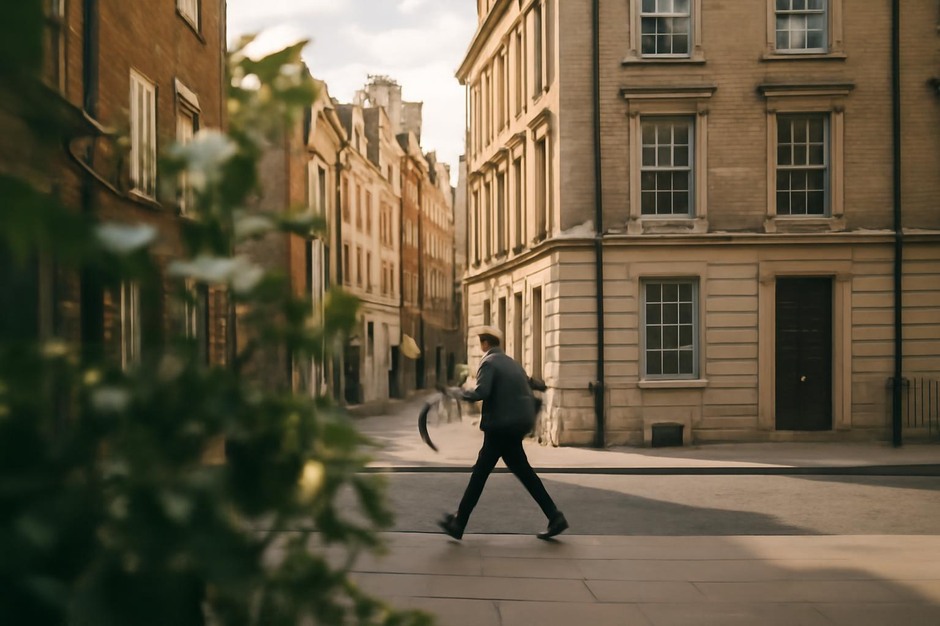
Neutral backgrounds—stone, concrete, weathered paint—make colour accents read more strongly. Negative space around the accent gives it breathing room and can enhance quietness. When multiple accents appear, think about visual weight: bright warm colours often draw more attention than muted cool tones.
Technical notes
- Expose for colour saturation rather than highlight preservation when the accent is subtle.
- Use a smaller aperture (higher f-number) if you want sharpness across the scene; use a wider aperture to separate the accent with shallow depth of field.
- Be mindful of white balance—automatic settings often work, but slight manual adjustments can retain the true character of a colour.
Reflection prompts
- Which colour accent felt most compelling and why—contrast, shape, placement, or personal association?
- How did moving the accent in the frame change the image’s mood or narrative?
- Did any background detail become important after framing? Note one unexpected relationship you discovered.
Practising with small colour accents trains your eye to find visual punctuation in ordinary scenes. Over time you learn to use colour not as decoration but as an organizing principle that guides where the viewer looks and how a story unfolds.